
If you’ve been shopping for hemp-derived THC beverages, you’ve probably wondered whether they’re actually legal. It’s one of the most common questions we hear, and with constantly changing cannabis laws and conflicting information online, it’s easy to see why.
The short answer is yes. Under current federal law, hemp-derived Delta-9 THC products are legal as long as they meet the definition of hemp established by the 2018 Farm Bill. However, that answer comes with a few important details. State laws can differ, not every THC product falls under the same regulations, and availability varies depending on where you live.
Whether you’re trying hemp beverages for the first time or simply want to better understand the laws surrounding them, here’s what you need to know.
What Is Hemp?
One of the biggest misconceptions about hemp is that it’s an entirely different plant than marijuana. It isn’t.
Both hemp and marijuana come from the cannabis plant. They’re both cannabis. The difference isn’t the plant itself, but rather how much Delta-9 THC it contains.
Under the 2018 Farm Bill:
- Hemp contains 0.3% Delta-9 THC or less by dry weight
- Marijuana contains more than 0.3% Delta-9 THC by dry weight
That legal distinction determines how each product is regulated in the United States.
Because hemp falls below the federal THC threshold, hemp-derived products like beverages, gummies, and tinctures can be produced and sold under federal law, provided they comply with all applicable regulations. Marijuana products, meanwhile, are regulated through state cannabis programs and are only available through licensed dispensaries in states where cannabis is legal.
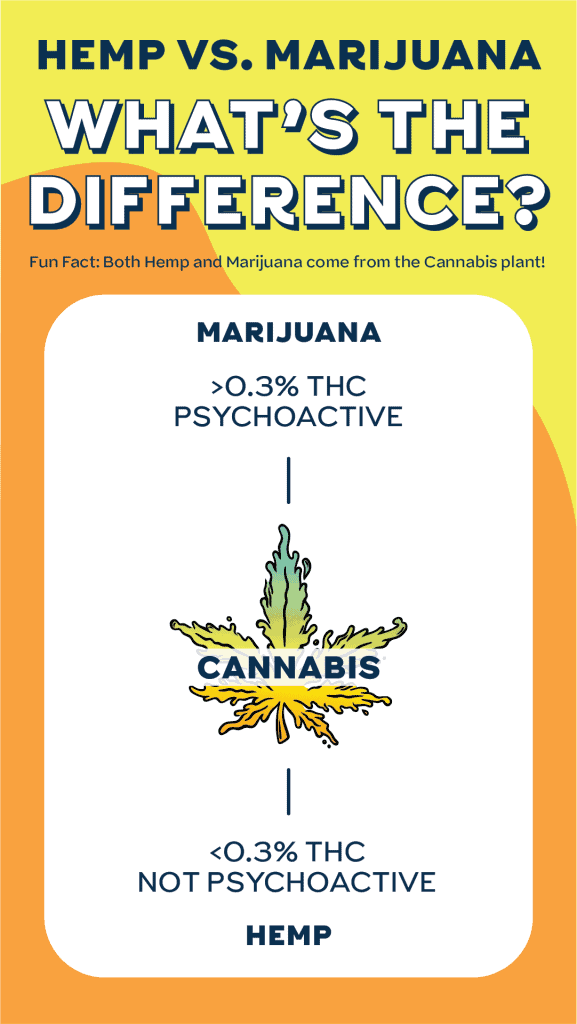
Although they’re regulated differently, it’s important to remember that hemp and marijuana both come from cannabis. The distinction is based on THC concentration and the legal framework surrounding each product.
What Is the 2018 Farm Bill?
The Agriculture Improvement Act of 2018, more commonly known as the 2018 Farm Bill, changed the way hemp is regulated in the United States. Before the bill was passed, hemp was treated much like marijuana under federal law. The Farm Bill removed hemp from the list of controlled substances and established a legal framework for growing, processing, and selling hemp-derived products.
Most importantly, the legislation defined hemp as cannabis containing no more than 0.3% Delta-9 THC by dry weight. Any cannabis plant or product that exceeds that threshold is considered marijuana under federal law and is regulated differently.
That distinction created an entirely new category of federally legal hemp-derived products, including beverages, gummies, tinctures, and other consumer goods.
What Does the 0.3% Rule Actually Mean?
The phrase “less than 0.3% Delta-9 THC” often causes confusion because many people assume it refers to the total amount of THC in a product. It doesn’t.
Instead, the law measures the concentration of Delta-9 THC relative to the product’s dry weight. This distinction is especially important for beverages. Because drinks contain a much greater overall weight than products like flower or concentrates, they can contain several milligrams of Delta-9 THC while still remaining below the legal limit established by federal law.
This is one of the reasons hemp beverages have become such a rapidly growing category. Manufacturers can create products that deliver a consistent, enjoyable experience while remaining compliant with the current legal definition of hemp.
Is Hemp-Derived Delta-9 THC Different From Marijuana-Derived Delta-9 THC?
Another common misconception is that hemp-derived Delta-9 THC is somehow different from the Delta-9 THC found in marijuana.
Chemically, it isn’t.
Delta-9 THC is the same cannabinoid regardless of whether it’s derived from hemp or marijuana. It interacts with the body’s endocannabinoid system in the same way and produces the same types of effects. The difference isn’t the molecule itself. It’s the source of the cannabinoid and the regulations surrounding the finished product.
Hemp-derived Delta-9 products must comply with the legal definition established by the 2018 Farm Bill. Marijuana-derived products are regulated through state cannabis programs and are only available through licensed dispensaries.
Why Can Keef Ship Hemp Beverages but Not Dispensary Products?
Keef has products in both the hemp market and the regulated cannabis market, but they operate under entirely different legal frameworks.
Our hemp beverages are made with federally compliant hemp-derived Delta-9 THC. Because they meet the current legal definition of hemp, they can be sold online and shipped directly to consumers in states where hemp-derived THC beverages are permitted.
Our cannabis beverages, on the other hand, are produced for licensed marijuana markets. Those products are regulated by individual states and must be sold through licensed dispensaries. Federal law does not allow marijuana products to be shipped across state lines, even if both states have legalized cannabis.
That’s why you may find Keef products at your local dispensary that aren’t available through our online store, while our hemp beverages can be delivered directly to customers in many parts of the country.
Why Doesn’t Keef Ship to Every State?
Although hemp is federally legal, individual states have the authority to create their own laws governing hemp-derived THC products. Some states permit hemp beverages, while others have restrictions or outright bans on intoxicating hemp products.
As a result, availability varies across the country, and shipping policies may change as state regulations evolve. At Keef, we’re committed to complying with both federal and state laws, which is why we only ship our hemp beverages to states where they’re currently permitted.
Before ordering, it’s always a good idea to check whether hemp-derived THC beverages are available in your state.
The Bottom Line
So, are hemp-derived Delta-9 THC drinks legal?
Today, the answer is yes. Under the 2018 Farm Bill, hemp-derived products containing no more than 0.3% Delta-9 THC by dry weight are federally legal. That legal distinction has made it possible for companies like Keef to create hemp beverages that can be shipped directly to consumers in many states, while our cannabis beverages remain available through licensed dispensaries.
As regulations continue to evolve, we’ll remain committed to producing high-quality hemp beverages, staying compliant with changing laws, and keeping our customers informed every step of the way.
Whether you’re new to hemp beverages or have been enjoying them for years, understanding the laws behind these products can help you make informed decisions and better understand the difference between federally legal hemp products and state-regulated cannabis products.